


Our Main Services
Boiler Installation
Installation of gas, oil and condensing boilers by our certified heating engineers.
Boiler Maintenance
Full annual inspection, cleaning and service certificate for all boiler brands.
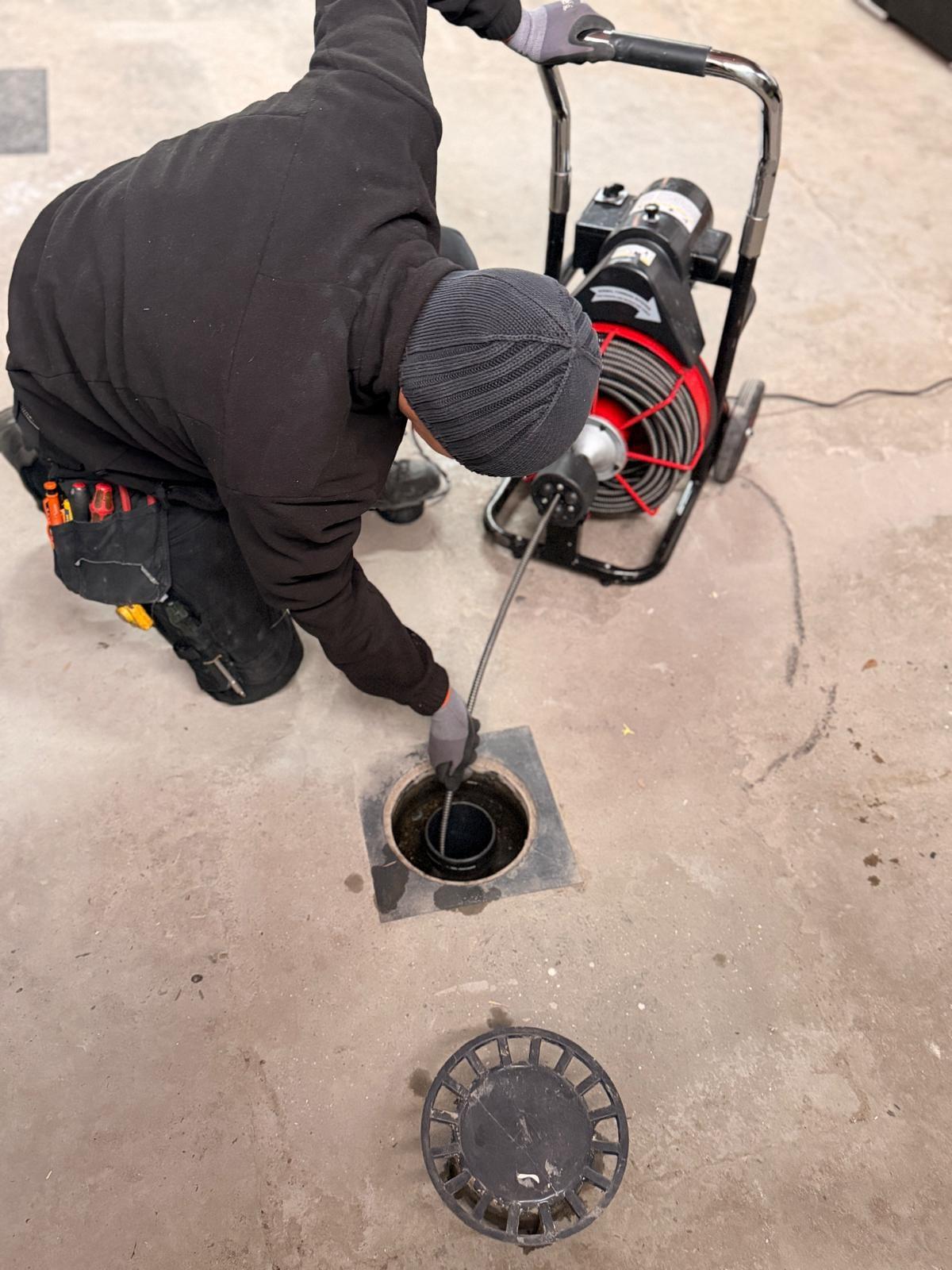
Drain Unblocking
Fast response on blocked drains with high-pressure equipment and camera inspection.
Chimney Sweeping
Chimney and flue sweeping with official certificate for your insurance.
Leak Detection
Non-destructive detection using thermal cameras and high-precision ultrasound.
Plumby pricing
Transparent prices, no surprises. All rates listed VAT-excluded.
Heating repair
Repair 7am-5pm (travel + 1st half hour)
90 €Repair 5pm-10pm (travel + 1st half hour)
110 €Repair 10pm-7am (travel + 1st half hour)
130 €Surcharge per extra 30 min
+40 €
| Service | Price excl. VAT |
|---|---|
| Repair 7am-5pm (travel + 1st half hour) | 90 € |
| Repair 5pm-10pm (travel + 1st half hour) | 110 € |
| Repair 10pm-7am (travel + 1st half hour) | 130 € |
| Surcharge per extra 30 min | +40 € |
- VAT 21 % (standard).
- Base price includes travel + first half hour of intervention.
- Listed rates apply only to installations that have been serviced annually.
Plumbing repair
Plumbing repair 8am-5pm (travel + 1st half hour)
from 110 €Travel only
from 50 €Surcharge per extra 30 min
+40 €
| Service | Price excl. VAT |
|---|---|
| Plumbing repair 8am-5pm (travel + 1st half hour) | from 110 € |
| Travel only | from 50 € |
| Surcharge per extra 30 min | +40 € |
- VAT 21 % (repair).
- Base price includes travel + first half hour of intervention.
- Listed rates apply only to installations that have been serviced annually.
Boiler maintenance
Gas maintenance
122,64 €Oil maintenance
200,00 €
| Service | Price excl. VAT |
|---|---|
| Gas maintenance | 122,64 € |
| Oil maintenance | 200,00 € |
- VAT 21 % standard.
- Listed rates apply only to installations that have been serviced annually.
Chimney sweeping & relining
Chimney sweep wood / coal / open fire
from 90 €Standard chimney sweep
from 90 €Gas chimney sweep
from 90 €Oil chimney sweep
from 120 €Pellet stove cleaning
from 100 €Camera inspection (chimney)
from 130 €Tar removal
from 150 €Chimney lining (per metre)
from 120 €
| Service | Price excl. VAT |
|---|---|
| Chimney sweep wood / coal / open fire | from 90 € |
| Standard chimney sweep | from 90 € |
| Gas chimney sweep | from 90 € |
| Oil chimney sweep | from 120 € |
| Pellet stove cleaning | from 100 € |
| Camera inspection (chimney) | from 130 € |
| Tar removal | from 150 € |
| Chimney lining (per metre) | from 120 € |
- VAT 21 % (maintenance).
- Listed rates apply only to installations that have been serviced annually.
Drain unblocking & inspection
Sink unblocking
from 90 €Toilet unblocking
from 100 €Pipe unblocking
from 130 €Emergency intervention
from 120 €Camera inspection (pipe)
from 140 €High-pressure cleaning
from 150 €
| Service | Price excl. VAT |
|---|---|
| Sink unblocking | from 90 € |
| Toilet unblocking | from 100 € |
| Pipe unblocking | from 130 € |
| Emergency intervention | from 120 € |
| Camera inspection (pipe) | from 140 € |
| High-pressure cleaning | from 150 € |
- VAT 21 % (repair).
- Listed rates apply only to installations that have been serviced annually.
Leak detection
Leak detection (with report)
from 230 €Full leak detection
from 250 €
| Service | Price excl. VAT |
|---|---|
| Leak detection (with report) | from 230 € |
| Full leak detection | from 250 € |
- VAT 21 % (repair).
- Detection report required by insurers for water damage claims.
- Listed rates apply only to installations that have been serviced annually.
Sanitary (targeted interventions)
Faucet replacement (excl. part)
from 55 €Toilet flush mechanism install
from 60 €Full new toilet cistern install
from 110 €
| Service | Price excl. VAT |
|---|---|
| Faucet replacement (excl. part) | from 55 € |
| Toilet flush mechanism install | from 60 € |
| Full new toilet cistern install | from 110 € |
- VAT 21 %.
- Listed rates apply only to installations that have been serviced annually.
Installations (heating / sanitary)
Boiler installation (gas / oil / condensing / hybrid)
Op offerteRadiator installation
Op offerteHeat pump install (air-water, geothermal)
Op offerteAny other installation
Op offerte
| Service | Price excl. VAT |
|---|---|
| Boiler installation (gas / oil / condensing / hybrid) | Op offerte |
| Radiator installation | Op offerte |
| Heat pump install (air-water, geothermal) | Op offerte |
| Any other installation | Op offerte |
- All installations performed on personalised free quote only.
- Heat pumps may be eligible for ISDE subsidy.
- Listed rates apply only to installations that have been serviced annually.
Request a Quick Quote
Get a callback within 10 minutes for your plumbing emergency.
Why choose Plumby for your plumbing and heating in the Netherlands?
Hiring a tradesperson for plumbing and heating in the Netherlands should never be left to chance. In the Netherlands, every plumbing and heating professional must be technically competent and, for gas and combustion work, operate according to the applicable installation rules; certified installers are listed in registers such as InstallQ, Sterkin or KvINL. Plumby Netherlands selects only independent craftsmen with the right credentials, a valid business liability insurance and — for refrigerant work (heat pumps, air conditioning) — F-gas certification. Every craftsman is rated after each job; anyone whose average drops below 4 out of 5 stars is removed from the network. This requirement guarantees a fast, compliant and durable intervention in the Netherlands.
The Dutch housing stock is varied: pre-war terraced houses and canal-side buildings sometimes still with lead or galvanised pipes, post-war reconstruction districts and walk-up flats from the 1950s and 1960s, 1970s-1980s through-lounge homes, and modern, very energy-efficient new builds meeting the BENG standards or even net-zero. Installations range from copper and early plastics to PE and multilayer pipe networks, from gas boilers on natural gas to air-water and ground-source heat pumps. Our plumbing and heating craftsmen covering the Netherlands master these technologies and arrive with the right material, avoiding the back-and-forth for a missing part and limiting the final cost.
How a plumbing and heating intervention works in the Netherlands
- Contact within 90 seconds: call +31 6 3829 1624 or use the form; an advisor qualifies the request and identifies the nearest craftsman to the Netherlands.
- Transparent quote before travel: for non-urgent work, a detailed quote (labour, parts, call-out). No intervention without explicit agreement.
- Fast arrival: for emergencies, target arrival within 30 minutes in the Netherlands; for planned work, a 2-hour slot within 48 to 72 hours with a call 30 minutes before.
- Diagnosis and repair: explanation in plain language, repair with standard parts from the van; specific parts ordered with a return within 48 hours.
- Payment and warranty: iDEAL, debit card, credit card or SEPA transfer, an immediate VAT-compliant invoice (21%), 12-month parts and labour warranty.
Rules and obligations in the Netherlands
In the Netherlands, periodic boiler maintenance is strongly recommended and often a condition of the buildings or contents insurance in the event of damage; a maintenance certificate is issued and kept. Work on gas installations falls under strict safety rules (carbon monoxide, flue gas extraction) and must be carried out by a competent, certified installer. The country is in the middle of its energy transition: new builds are generally gas-free and replacing a gas boiler with a heat pump or hybrid setup may qualify for the ISDE subsidy or a loan from the National Heat Fund, subject to technical conditions. Plumby checks the credentials and insurance of its partner craftsmen every year.
The most requested plumbing and heating interventions in the Netherlands
Across thousands of jobs carried out, certain requests come up very regularly in the Netherlands and neighbouring municipalities. Knowing them helps you describe your problem better on the phone and speeds up the diagnosis. These are the most frequent cases:
- Leak under the sink or behind the toilet: aged seal, pierced supply hose, cracked toilet flange — usually fixed within an hour with parts from the van.
- Blockage: kitchen drain silted up by grease, shower slowed by hair, main sewer blocked requiring high-pressure jetting in the Netherlands.
- Boiler fault: fault code on the display, water pressure too low, boiler no longer igniting — common on the first cold days in the Netherlands homes.
- No more hot water: scaled cylinder element, worn anode, faulty thermostat; the hard Dutch water accelerates this.
- Cold radiators at the bottom or flow noise: fouled or poorly bled system, deflated expansion vessel, pump seized after summer.
- Water damage: non-destructive leak detection (camera, tracer gas, thermography) before opening a wall, with a technical report for insurance.
- Compliance work: replacing an inlet combination, fitting a pressure reducer, connecting to standards before a sale or rental in the Netherlands.
For each of these situations, the useful reflex before the craftsman arrives is to shut off the supply concerned: the stopcock under the sink for a localised leak, the main valve before the meter for a major leak, the electric boiler breaker for a fault, and closing the gas tap with immediate ventilation if there is a suspicious smell. These simple steps limit damage and often reduce the final cost of the plumbing and heating intervention in the Netherlands.
Building age, water hardness and heating in the Netherlands
Drinking water in the Netherlands is hard to very hard across large parts of the country (Limburg, North Brabant and the east), while it is softer in the dune-water areas along the North and South Holland coast. This hardness has concrete consequences for any installation in the Netherlands: accelerated scaling of heating elements and heat exchangers, reduced mixer flow, fouled boiler exchangers and a gradually falling efficiency. Where relevant, our plumbing and heatingcraftsmen advise a correctly sized water softener or anti-scale filter, periodic cylinder descaling and preventive replacement of the sacrificial anode, which markedly extends equipment life.
Building age also calls for a different approach. In old city centres (the canal belt, historic town cores) you still find galvanised steel or lead risers, soldered copper and cast-iron drains; diagnosis must be cautious there and compliance sometimes phased. Reconstruction districts and 1970s-1980s areas often combine copper and early plastics. Recent new builds generalise PE and multilayer pipe, low-temperature underfloor heating and the air-water heat pump. In the Netherlands, an experienced craftsman quickly identifies the installation type and adapts the method rather than applying a single standard solution.
Preventive maintenance and seasonal advice in the Netherlands
Most plumbing and heating emergencies are avoidable. Annual boiler maintenance is strongly recommended in the Netherlands and is often a condition for a damage payout by the insurer. The best time to have the boiler serviced in the Netherlands is between late spring and early autumn, before the peak demand of the first cold days when waiting times rise everywhere in the country. As winter approaches, it is worth bleeding the radiators, checking water pressure (typically 1 to 1.5 bar cold), checking outdoor drains for proper flow and protecting from frost any pipework in unheated rooms, garages and lofts. After a long absence, gradually reopening the water and a visual check of vulnerable points avoids much trouble.
On the savings side, a few simple actions have a measurable effect on a household's energy and water bill in the Netherlands: setting the domestic hot water temperature around 60 °C (hot enough against legionella, not needlessly high), fitting aerators and thermostatic mixers, having the heating system cleaned every five to ten years to restore lost efficiency, and insulating pipes through cold zones. Our plumbing and heating craftsmen explain these levers during each intervention rather than limiting themselves to the one-off repair.
Quote, payment, invoicing and insurance
Pricing transparency is a Plumby promise in the Netherlands. For any non-urgent intervention in the Netherlands, a detailed quote is communicated before travel, separating labour, parts and call-out, and no work starts without explicit agreement. For emergencies, a clear range is stated by phone and the final invoice, compliant with the Dutch 21% VAT, is sent immediately by email — useful for your administration and your insurer. Accepted payment methods are iDEAL, debit card, credit card and SEPA transfer. The parts and labour warranty is twelve months.
In the event of damage (water damage in particular), Plumby works with the major companies active in the Netherlands — Centraal Beheer, Interpolis, Nationale-Nederlanden, Univé, ASR. At the client's explicit request in the Netherlands, the signed technical report and the detailed invoice can be sent directly to the insurer to speed up the handling of the file, often a gain of several weeks. This coordination with the Dutch insurance landscape is rarely offered by an isolated craftsman and is concrete added value for individuals as well as for owners' association managers and property managers.
Safety, standards and points of vigilance
Some situations during a plumbing and heating intervention in the Netherlands relate directly to safety and tolerate no improvisation. A gas smell means: do not operate any switch or flame, close the main tap, ventilate widely and leave the premises before calling from outside; gas work belongs with a competent, certified installer. Water damage near a meter cupboard or sockets calls for switching off the circuit concerned before any handling. A boiler that repeatedly goes into fault must not be reset endlessly: the fault often points to a combustion, flue or pressure problem requiring a professional diagnosis. Our craftsmen systematically point out these reflexes, because they prevent a small incident from becoming major damage.
The Netherlands in the energy transition
No country in Europe is moving away from natural gas as decisively as the Netherlands. Since 2018 new builds are generally delivered without a gas connection, the Groningen field has been wound down, and municipalities are drawing up neighbourhood-by-neighbourhood transition plans to make existing homes gas-free. For anyone having plumbing and heating carried out in the Netherlands this means concrete choices: replacing a written-off boiler with a new high-efficiency boiler, a hybrid heat pump (boiler plus electric heat pump), or a full all-electric heat pump, possibly combined with underfloor heating and better insulation. Our craftsmen honestly work out what is technically and financially feasible in your situation — a hybrid setup is a realistic intermediate step in many existing homes, while a full heat pump often requires insulation and low-temperature emitters first.
Available schemes are part of that trade-off. The ISDE subsidy contributes towards heat pumps, solar water heaters and insulation; the National Heat Fund provides an Energy Saving Loan under conditions, sometimes at 0% for lower incomes; on top of that there are local municipal grants and, for an owners' association, the VvE Energy Saving Loan. Conditions and amounts change yearly; our plumbing and heating craftsmen in the Netherlands know the current list of eligible appliances and supply the documents (registration and invoice details) you need to complete the application. We do not sell you anything you do not need — the goal is an installation that suits your home and budget, not the most expensive option.
Owner-occupiers, tenants, associations and businesses in the Netherlands
The situation differs greatly per client, and we tailor the approach accordingly. Owner-occupiers in the Netherlands usually want a durable repair and clear advice on repair versus replacement. Tenants often have an emergency and need to know what falls under the landlord; we provide a clear report you can pass to the housing corporation or private landlord. Landlords and managers want cost control, plannability and an invoice stream that is correct per property. Owners' associations deal with the distinction between the private unit and shared installations (stacks, collective heating, roofs) — a clear cause assessment prevents disputes over who pays. Shops, hospitality and offices in the Netherlands want interventions outside opening hours and short downtime. For each of these profiles the Plumby advantage is the same: one phone number, a qualified craftsman, a compliant invoice.
Frequently asked questions about plumbing and heating in the Netherlands
How quickly can someone be in the Netherlands? For a genuine emergency we aim for arrival within 30 minutes in urban areas and 35 to 50 minutes in more rural areas; for planned work a two-hour slot within 48 to 72 hours.
What does a plumbing and heating intervention cost? For non-urgent work you receive a detailed quote in advance (labour, parts, call-out separated), including 21% VAT. For emergencies a clear range is stated by phone. No work without agreement.
Do you also work evenings and weekends in the Netherlands? Yes, the network is reachable seven days a week, with an emergency service outside office hours for critical breakdowns such as an active leak or boiler failure in winter.
What if the same problem comes back? Every intervention carries a twelve-month parts and labour warranty. If the fault returns within that period we send a craftsman again at no cost; document with photos if possible.
Which payment methods do you accept? iDEAL, debit card, credit card and SEPA transfer; the VAT-compliant invoice follows immediately by email, useful for your administration or a claim on the buildings or contents insurance.
Typical plumbing and heating jobs and how long they take
A realistic time estimate helps you plan. A simple leak under the sink or a dripping tap is usually fixed in 30 to 60 minutes. A blocked drain takes 30 minutes to an hour and a half, depending on whether it is at the trap or deeper in the stack. Resolving a boiler fault generally takes 1 to 2 hours; fully replacing a boiler one working day, including removing the old unit and balancing the new one. Locating a hidden leak with a camera or tracer gas takes 1 to 3 hours, before anything is opened up. A complete bathroom renovation in the Netherlandsruns over several working days and is always set out in advance in a detailed quote. These are indicative times: the craftsman confirms the estimate after the on-site diagnosis, so you are not faced with surprises.
For recurring complaints our plumbing and heating craftsmen look beyond the symptom. A radiator that keeps drawing air, a boiler that repeatedly loses pressure or a drain that silts up again after every cleaning points to an underlying cause — a leak in the system, a failed expansion vessel, root ingress or a collapsed sewer. We name that cause and give you the choice: a quick patch or a durable repair, with the cost and lifespan of both presented honestly side by side. That way you do not pay twice for the same problem in the Netherlands.
Quality, reviews and liability
The difference between a network and a random search is control. Every Plumby craftsman working in the Netherlands is rated by the client after each job; that score determines whether they keep receiving work. Anyone structurally underperforming is removed from the network. Selection checks technical competence, registration in a recognised register (InstallQ, Sterkin, KvINL) and a valid business liability insurance, so any damage during the work is covered. Gas and combustion work is moreover subject to strict safety rules around carbon monoxide and flue-gas extraction; we do not carry out that work with unqualified people. This quality assurance is not marketing but the core of why a network model is more reliable for the client in the Netherlands than calling an unknown craftsman ad hoc.
Materials, parts and what the warranty covers
The quality of a plumbing and heating repair in the Netherlands stands or falls with the parts used. Our craftsmen work where possible with brand parts or equivalent quality, not the cheapest universal variant that fails again within a year. For boilers this means original pumps, gas valves and sensors; for sanitary ware solid taps and inlet combinations that withstand the Dutch, often hard, tap water. The invoice states which part was fitted, so any manufacturer warranty remains traceable. The twelve-month Plumby warranty covers both the part and the labour insofar as the defect is attributable to the plumbing and heating work carried out; normal wear, scaling from extremely hard water or damage from misuse logically fall outside it. We explain that distinction in advance, so you are not faced with surprises in the Netherlands if you call back later.
For replacements we think with you about lifespan. A heating engineer who only replaces the faulty part solves the symptom; a good craftsman also tells you whether the boiler or cylinder is ageing and whether another repair is sensible or money thrown away. That honesty sometimes costs a job, but in the Netherlands it yields customers who return and recommend us — exactly the behaviour the rating system rewards.
Water-aware and sustainable living in the Netherlands
The Netherlands is a water country, but fresh drinking water is not an infinite source: in dry summers drinking-water companies call for restraint and water authorities impose local restrictions. A plumbing and heating craftsman who looks beyond the repair can help you save concretely inthe Netherlands: a leaking toilet or a dripping tap unnoticed wastes thousands of litres a year; a water-saving shower head, a dual-flush cistern and aerators on the taps lower both water and energy use (hot water is the largest energy item in an average household after heating). For boilers and cylinders we advise a hot-water temperature high enough against legionella but not needlessly high, and periodic descaling of the cylinder to maintain efficiency.
Sustainability at Plumby is not a sales pitch but part of the advice. Whether it is insulating pipes that run through cold spaces, balancing a heating system so each radiator gets the right amount of water, or switching in time to a hybrid or full heat pump when that is feasible in your home in the Netherlands — our craftsmen lay out the options, the costs and the payback time soberly side by side, and point to the current subsidies instead of forcing an expensive solution.
National and cross-border coverage
Plumby covers the whole of the Netherlands — from the Randstad (Amsterdam, Rotterdam, The Hague, Utrecht) to North Brabant, Gelderland, Overijssel, Limburg, Friesland, Groningen, Drenthe, Flevoland and Zeeland — plus a 30 km border strip in Belgium (Flanders) and Germany (North Rhine-Westphalia, Lower Saxony) for border regions. For the Netherlands and its surroundings, the same technician can chain several appointments in the area, reducing waiting times and pooling call-out costs. To book, call +31 6 3829 1624 seven days a week, or use the form on this page.
Plumby, the plumbing and heating network of the Netherlands
Plumby connects individuals, landlords, owners' association managers and businesses in the Netherlands with a network of independent plumbers and heating engineers, carefully selected and continuously rated. Our purpose is simple: to allow anyone facing a leak, a blockage, a boiler fault or a renovation project to find, in less than 90 seconds on the phone, a qualified craftsman genuinely available and close by, anywhere in the country — from the Randstad to the villages of Friesland, Drenthe or Limburg. The service is reachable at +31 6 3829 1624 seven days a week, with an emergency line for critical breakdowns.
How Plumby works in the Netherlands
When you call or fill in the form, an advisor qualifies the request: nature of the problem, urgency, type of dwelling, exact location. Our system then identifies the nearest competent craftsmen immediately available and contacts them in parallel. The first to accept the job is confirmed and sets off; for emergencies the target is arrival within 30 minutes in urban areas. For planned work (maintenance, boiler replacement, bathroom renovation), a two-hour slot is offered within 48 to 72 hours, with a confirmation call 30 minutes before. At every step you know who is coming, when, and on what pricing basis — no bad surprise on the invoice.
This network model brings a decisive advantage over calling an isolated craftsman: availability. An overloaded or off-duty independent plumber does not answer; a network pools dozens of schedules and ensures a request finds a taker, including at weekends, on public holidays and at night. It also brings a quality framework: every partner craftsman is rated by clients after each job, and anyone dropping below 4 out of 5 stars is removed from the network. Initial selection requires technical competence and registration in recognised registers (InstallQ, Sterkin, KvINL), a valid business liability insurance and, for refrigerants, F-gas certification.
Our fields of work in the Netherlands
The Plumby network covers the full range of plumbing and heating. In sanitary plumbing: leak detection and repair, unblocking sinks, toilets and stacks mechanically or with high pressure, replacing taps, cisterns and inlet combinations, installing and renovating bathrooms. In heating: annual maintenance and fault-finding of gas boilers, replacement with a high-efficiency boiler, hybrid setup or heat pump, system cleaning and balancing, fitting and adjusting thermostats and thermostatic valves. For domestic hot water: troubleshooting and replacement of electric, gas or heat-pump cylinders, descaling and anode replacement. Added to this are chimney sweeping and flue-gas inspection, plus compliance work before a sale or rental.
This versatility is valuable in the Netherlands, where a single incident often combines several specialties: a boiler fault may reveal a fouled system and a failed expansion vessel; water damage requires non-destructive leak detection before any repair; a bathroom renovation coordinates plumbing, drainage, waterproofing and sometimes electrics. Being able to mobilise, through a single point of contact, exactly the craftsman with the right skill avoids multiple appointments and speeds up the complete resolution.
The Netherlands served region by region
Plumby is present in all twelve provinces. The Randstad — North and South Holland with Amsterdam, Rotterdam, The Hague, Utrecht and their suburban municipalities — has the shortest response times thanks to the high density of craftsmen. North Brabant (Eindhoven, Tilburg, Breda, Den Bosch) and Gelderland(Nijmegen, Arnhem, Apeldoorn) form strong regional hubs. In Overijssel, Flevoland and Utrecht (Zwolle, Enschede, Almere, Amersfoort) response times are intermediate, while the northern and southern provinces — Friesland, Groningen, Drenthe, Zeeland and Limburg — are served by craftsmen based as close as possible, including border regions. The result is genuinely national coverage, with no white spots.
This nationwide presence answers a concrete need: residents of smaller municipalities have historically struggled to find a craftsman willing to travel for an emergency. By pooling availability at national scale and relying on a 30 km border strip in Belgium (Flanders) and Germany (North Rhine-Westphalia, Lower Saxony), Plumby ensures a request from a village receives the same attention as a call from the centre of a large city.
Individuals, owners' associations and businesses: who Plumby is for
The service is first of all for individuals — owner-occupiers and tenants — for all emergencies and the routine maintenance of a home. It also meets the needs of landlords and property managers, who must intervene quickly at a tenant's home while keeping costs under control and invoices traceable for their administration. Owners' association managers find in Plumby a partner able to handle both a leak in a private unit and a problem on a shared stack, with a clear report for the allocation of charges. Finally, shops, offices and small businesses benefit from interventions that can be scheduled outside opening hours.
Frequently asked questions about Plumby's service in the Netherlands
What is the response time in the Netherlands? For a genuine emergency (active leak, sewer backflow, boiler failure in winter), the target is arrival within 30 minutes in urban areas and 35 to 50 minutes in rural regions. For non-urgent work, an appointment is offered within 48 to 72 hours with a two-hour slot.
What about VAT and pricing? Rates are announced in advance, including 21% VAT, with no overrun without the client's explicit agreement. For non-urgent work you receive a detailed quote separating labour, parts and call-out.
In which languages can I be assisted? Customer service and craftsmen communicate in Dutch and English, matching the international population and the border regions.
How do payment and warranty work? iDEAL, debit card, credit card or SEPA transfer; a compliant invoice immediately by email; a twelve-month parts and labour warranty on every intervention.
Does Plumby really cover everywhere? Yes: all twelve provinces are served, with no white spots, thanks to the pooling of craftsmen and a 30 km border strip in Belgium and Germany. For any request, a single number: +31 6 3829 1624, or the form on this page.
Switching countries?
Select the right platform for faster service in your area.
Intervention in major cities
Discover our detailed service coverage in the largest cities in the Netherlands.